Moon Phase Test: What It Is, How to Take It, and What Your Results Mean
Everything you need to know about the moon phase test, how to find your birth moon phase, what each phase means, and how to use it for real self-insight.
If you have spent any time on social media lately, you have probably come across the moon phase test in one form or another — a TikTok filter, a viral compatibility quiz, or a friend excitedly showing you their result and asking for your birthday. It has become one of the more popular corners of internet astrology, and unlike a lot of trends, this one actually has real staying power because it taps into something people are genuinely curious about: their own emotional nature.
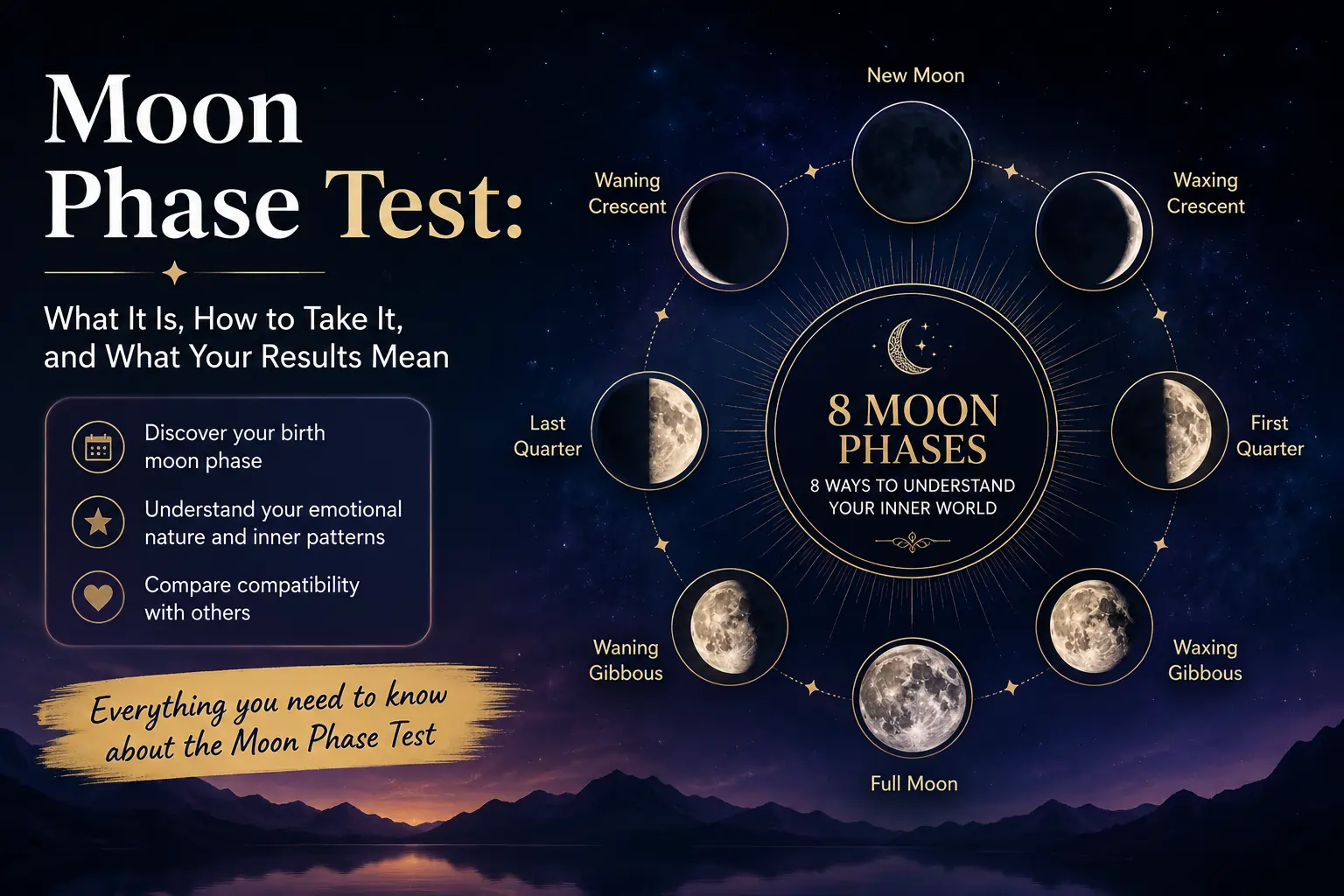
This guide covers everything you need to know about the moon phase test, what it actually measures, how to calculate your own result, what each of the eight lunar phases represents, and how to use the test for real insight rather than just a passing trend.
What Is a Moon Phase Test?
A moon phase test is based on the exact phase of the moon on the day you were born. Unlike your zodiac sun sign, which is determined by where the sun was positioned in the sky, your moon phase is determined by the moon’s visual shape at that moment — whether it was a sliver, a half circle, or fully round.
In astrology, the moon is associated with emotional instinct, inner needs, and the subconscious patterns that shape how you process feelings. Your sun sign might describe how you come across to others, but your moon phase speaks to what is happening underneath that surface. That is part of why the moon phase test has resonated so widely — it offers a layer of self-understanding that feels more personal and less performative than typical zodiac content.
The test can be used in a few different ways: as a personal reflection tool to understand your own emotional patterns, or as a compatibility comparison between you and someone else, whether that is a partner, friend, or family member.
How to Find Your Birth Moon Phase
Calculating your moon phase takes just a couple of minutes and does not require any astrology background.
- Go to a free lunar phase calculator. Sites like TimeandDate.com or Moongiant.com let you enter any date and instantly see the corresponding moon phase.
- Enter your exact birth date. You typically do not need your birth time, since the moon only shifts phases roughly every two to three days.
- Note the specific phase name. There are eight recognized phases, so make sure you get the precise one rather than a general category like “waxing” or “waning.”
- Repeat for anyone else you want to compare with. If you are using the test for compatibility, you will need their birth date too.
That is the entire process. From here, you can move on to understanding what your specific phase actually means.
The Eight Moon Phases Explained
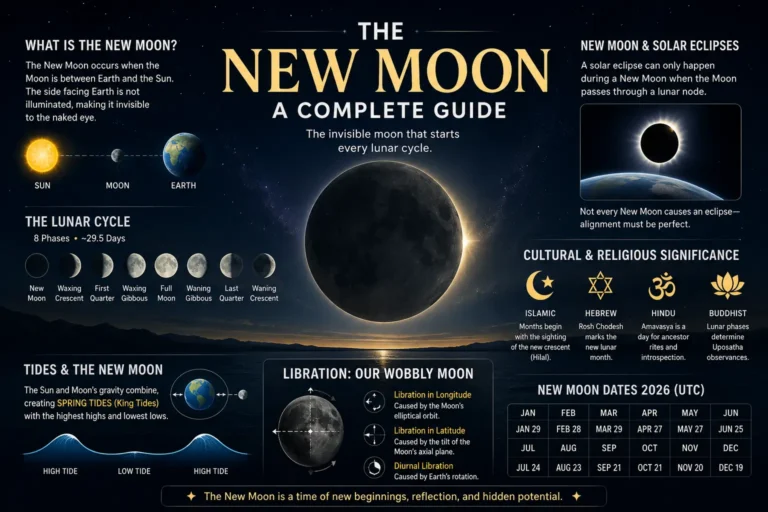
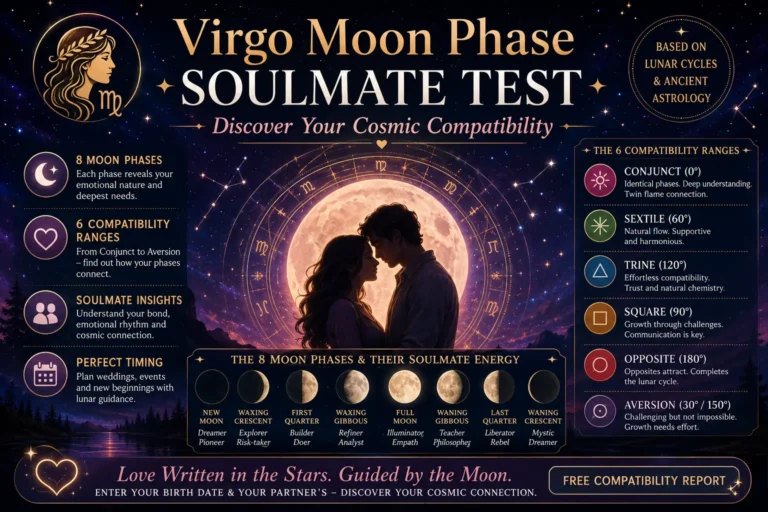
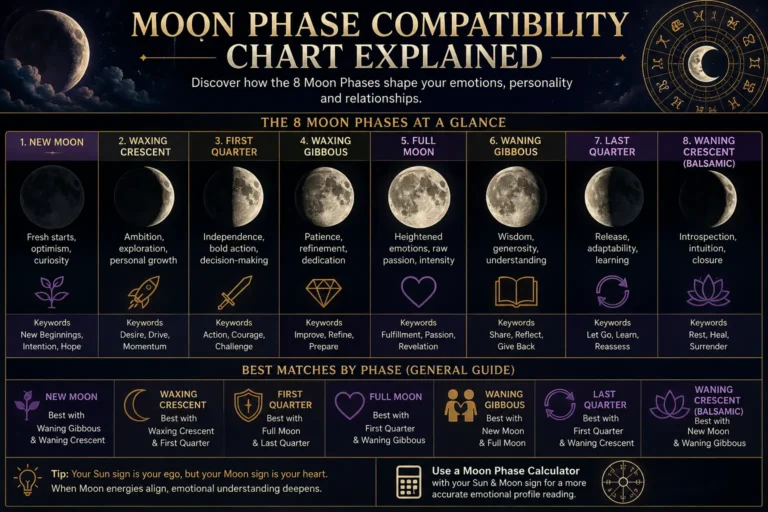
Each of the eight lunar phases carries its own emotional signature. Here is a breakdown of what each one generally represents.
New Moon
The New Moon represents beginnings, instinct, and a drive toward independence. People born under this phase tend to be ambitious and forward-looking, often more comfortable starting something new than maintaining the status quo. Emotionally, they can be private, preferring to process feelings internally before sharing them.
Waxing Crescent
This phase is tied to quiet determination and gradual growth. Waxing Crescent people are builders — steady, patient, and willing to put in consistent effort over time rather than seeking quick results. They tend to approach relationships and goals the same way, one deliberate step at a time.
First Quarter
First Quarter energy is decisive and direct. People with this phase tend to face challenges head-on rather than avoiding them, which can make them excellent at resolving conflict, though it sometimes means they come across as more intense than they intend to be.
Waxing Gibbous
This phase is associated with reflection and refinement. Waxing Gibbous people are natural analyzers, always looking for ways to improve, whether that is a project, a habit, or a relationship. They tend to ask a lot of questions, both of themselves and the people around them.
Full Moon
The Full Moon represents heightened emotion and intense self-awareness. This is one of the most talked-about phases because it amplifies whatever it touches. Full Moon people tend to feel things deeply and fully, which can make them incredibly warm and empathetic, but also more vulnerable to emotional overwhelm.
Waning Gibbous
This phase is tied to communication and generosity. Waning Gibbous people process their emotions out loud, often through conversation, and tend to be natural teachers or advisors within their friend groups and families.
Last Quarter
Last Quarter energy is about release and transformation. People with this phase tend to be comfortable with change and often find themselves helping others let go of what no longer serves them, whether that is an old habit, a past relationship, or an outdated belief.
Waning Crescent
The final phase before the lunar cycle begins again, Waning Crescent represents intuition and quiet wisdom. People with this phase tend to be reflective, calm under pressure, and deeply attuned to their inner voice, often serving as the grounded presence in their relationships.
How to Use the Test for Compatibility
If you are comparing your moon phase to someone else’s, here is a general framework for interpreting the result.
- Matching phases: Sharing the same exact moon phase as someone else often suggests emotional familiarity — an intuitive understanding that does not require much explanation. This pattern shows up frequently in close friendships and deep romantic bonds alike.
- Opposite phases: Phases sitting directly across the lunar cycle from each other represent a kind of emotional polarity. One person tends to lead or initiate emotionally, while the other reflects and mirrors. This dynamic often shows up in intense, transformative relationships.
- Neighboring phases: Phases that sit next to each other in the cycle suggest a relationship built around steady, mutual growth. These bonds often feel calm and collaborative rather than dramatic.
- Unrelated phases: If the phases do not fall into a clear pattern, the relationship can still be meaningful — it just may not follow one of the more defined dynamics above. These connections often serve a specific, situational purpose in your life rather than a long, defining role.
Why the Moon Phase Test Resonates With So Many People
Part of the reason this test has spread so widely is that it offers something most horoscope content does not: specificity that feels personal rather than generic. A sun sign description applies to roughly one-twelfth of the population, which can make it feel broad and impersonal. A moon phase, on the other hand, feels more individualized, and the accompanying descriptions often land closer to how people actually experience their own emotional world.
There is also something inherently satisfying about pairing an emotional concept with something visual. Watching two moon phases layer together, or reading a description that finally puts language to a feeling you have had trouble explaining, creates a small moment of recognition that people naturally want to share.
What the Test Cannot Tell You
It is worth being clear-eyed about the limits here. The moon phase test is a reflective, symbolic tool rooted in astrological tradition, not a scientifically validated psychological assessment. There is no peer-reviewed research confirming that your birth moon phase determines your emotional patterns or relationship compatibility.
That does not make the exercise pointless. Plenty of people find real value in symbolic frameworks like this, not because they are objectively true, but because they offer a structured way to reflect on emotions and relationships that might otherwise be hard to put into words. Use it as a starting point for self-reflection or a fun conversation starter, not as a definitive answer about yourself or anyone else.
Getting the Most Out of Your Result
If you want to actually get value out of the moon phase test rather than treating it as a one-time novelty, try these approaches:
- Reflect honestly on your own phase description. Notice which parts genuinely resonate and which do not. The parts that do resonate are worth paying closer attention to.
- Use it as a conversation tool, not a verdict. Comparing phases with a partner or friend can open up honest conversations about communication styles and emotional needs, which is far more valuable than the raw compatibility label itself.
- Revisit it over time. As you grow and change, you might notice your relationship to your own phase description shifting, which can be an interesting way to track your own emotional development.
- Do not let a mismatch discourage you. A less “ideal” pairing on paper does not predict how a real relationship will unfold. Actual compatibility is built through communication, shared values, and consistent effort.
Final Thoughts
The moon phase test offers a genuinely interesting lens for understanding yourself and your relationships, rooted in a real astrological concept even if it is often simplified for social media. Calculate your phase, read through what it represents, and use it as a starting point for reflection rather than a final answer. Whether you are checking your own emotional patterns or comparing notes with someone close to you, the real value lies in the self-awareness the process encourages.
Frequently Asked Questions
Do I need my exact birth time to find my moon phase?
No. Moon phases typically change every two to three days, so your birth date alone is usually enough to get an accurate result.
Is the moon phase test the same as a moon sign test?
No. A moon sign refers to the zodiac sign the moon was in at your birth, while a moon phase refers to the moon’s visual shape, illustrating a different layer of astrological meaning.
Can the moon phase test be used for non-romantic relationships?
Yes. Many people use it to explore compatibility with friends, family members, and coworkers, since it reflects emotional dynamics rather than romantic attraction specifically.
Is there any scientific basis for the moon phase test?
No. It is rooted in astrological tradition rather than scientific research, so it is best approached as a reflective or entertainment tool rather than a validated psychological measure.